
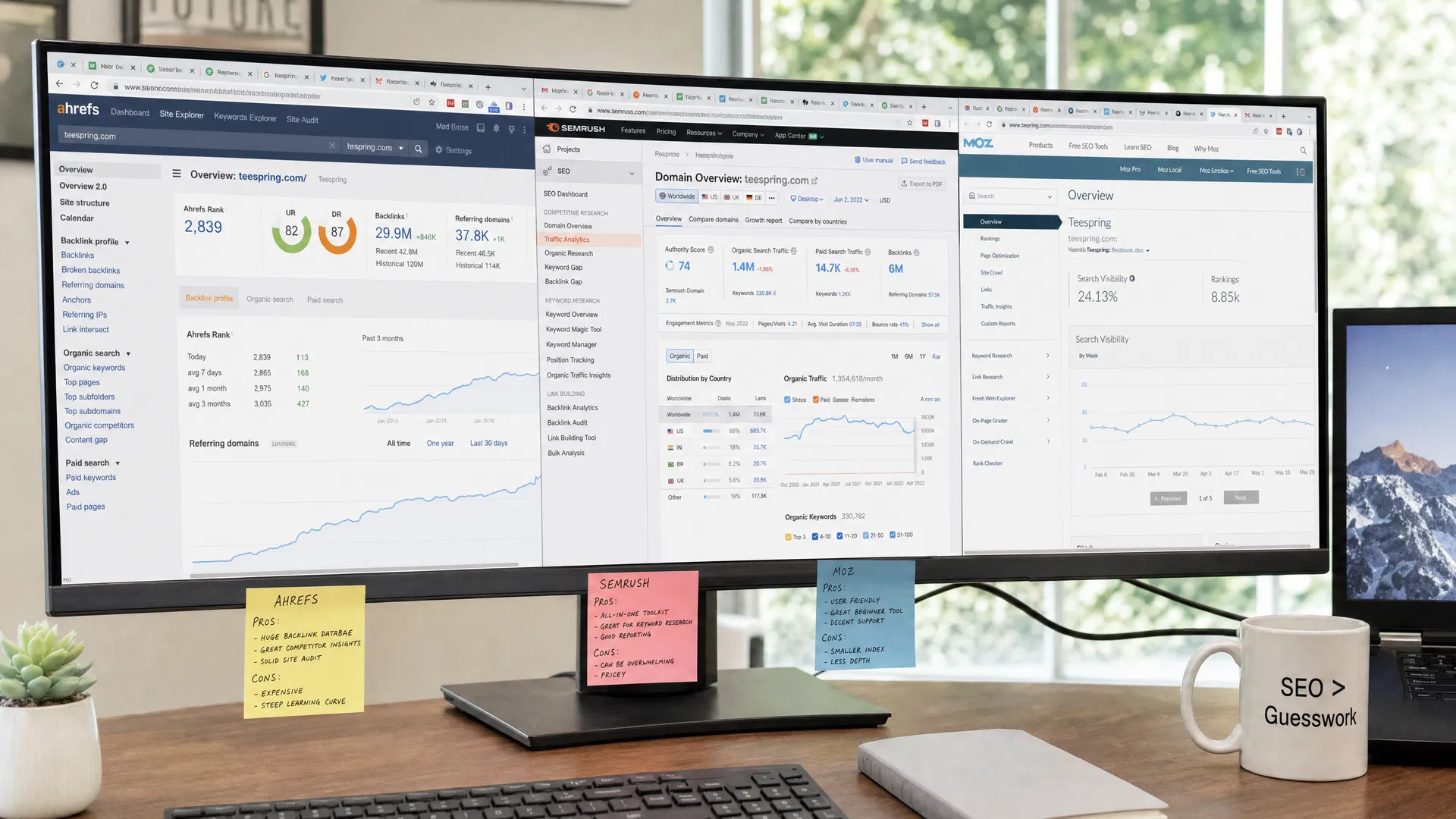
AI-driven SEO automation is a hot topic in 2026. For some, SEO remains a craft that nothing can replace. For others, AI can take over a good share of repetitive tasks and free up time for the decisions that matter. The reality lies somewhere in between: this guide shows which tasks to automate, which to keep in your own hands, and where to place the checkpoints.
The 5 pillars of SEO automation in 2026
Automating SEO doesn't mean pressing a button and waiting for traffic to climb. It's a system: automatic processes, plus human approval at critical moments. Here are the five areas where automation adds the most value.
1. Automated, regular technical audits
An SEO audit run once a quarter lets a lot of problems slip through. Sites change constantly: new pages, template changes, plugin updates. A regular crawl catches new problems without waiting for the next manual audit.
In Zerkado, a new crawl starts automatically, every 7 days by default, and the frequency can be set project by project. 404 errors, incorrect canonical tags, redirect chains or pages whose LCP exceeds 2.5 seconds surface at the next crawl, ranked by severity. Critical problems, such as those that block indexing, come before minor details: this keeps the team from drowning in alerts.
2. Assisted internal linking
Internal linking lends itself well to automation. On a site with several hundred pages, finding every relevant internal linking opportunity by hand takes a lot of time. A tool can analyze page content, spot the passages where a link would feel natural, and suggest an anchor and a target page.
Zerkado goes as far as insertion in WordPress. It suggests the source sentence, the anchor and the target page; you approve the links you want to keep, then the Zerkado WordPress plugin inserts them into the content. The plugin works with Gutenberg, the classic editor and the main page builders (Elementor, WPBakery, Divi, BeTheme). Each link keeps its status, and a link that has been placed can be removed from the history.
3. AI-assisted content optimization
The Content Copilot compares your page with the pages ranking at the top of Google for your keyword. It flags missing terms and sections, calculates a content score from 0 to 100, and the AI suggests rewrites of paragraphs, titles or meta descriptions. The time saved on preparation is real, but the writer stays in control: they review each suggestion, edit it and decide whether to apply it.
4. Automated reporting
Automated SEO reports are no longer just data exports. In Zerkado, they pull in the project's rankings, audit, traffic and backlinks, and the AI writes a plain-language summary. You can edit it before sending. Generation and email delivery can be scheduled weekly, every two weeks, monthly or quarterly.
5. Rank monitoring
Automated rank tracking checks your keywords at regular intervals and keeps the history. In Zerkado, checks run daily for top-10 keywords and every 2 to 5 days beyond that, and an in-app alert appears when a position drops. The analysis remains human: linking a drop to a Google update, a competitor's move or a change on the site takes judgment.
What AI CANNOT automate (and shouldn't)
Despite its progress, AI leaves some SEO decisions to humans:
- Overall strategy: which markets to target, which positioning to adopt, how to stand out from competitors
- Editorial creativity: original angles, real case studies, lessons learned in the field
- Human relationships: quality link building relies on genuine relationships with publishers
- Arbitration: when two recommendations contradict each other, human expertise decides
How Zerkado automates your SEO workflow
Zerkado is an all-in-one SEO platform whose modules share the same project data. Here is how a typical workflow runs:
- Automatic diagnosis: the technical audit crawls your site, ranks issues by severity, and the AI proposes an action plan
- Page optimization: the Content Copilot analyzes the pages you choose and suggests improvements, which you review
- Assisted linking: Zerkado suggests internal links, and the plugin inserts the ones you approve into WordPress
- Monitoring: rank tracking alerts you in the app when a position drops
- Scheduled reporting: reports are generated and sent to your clients on the planned dates
The time saved depends on your tools and your clients: measure it on yours. Try Zerkado free for 14 days, with no credit card, and compare it with the way you work today.