
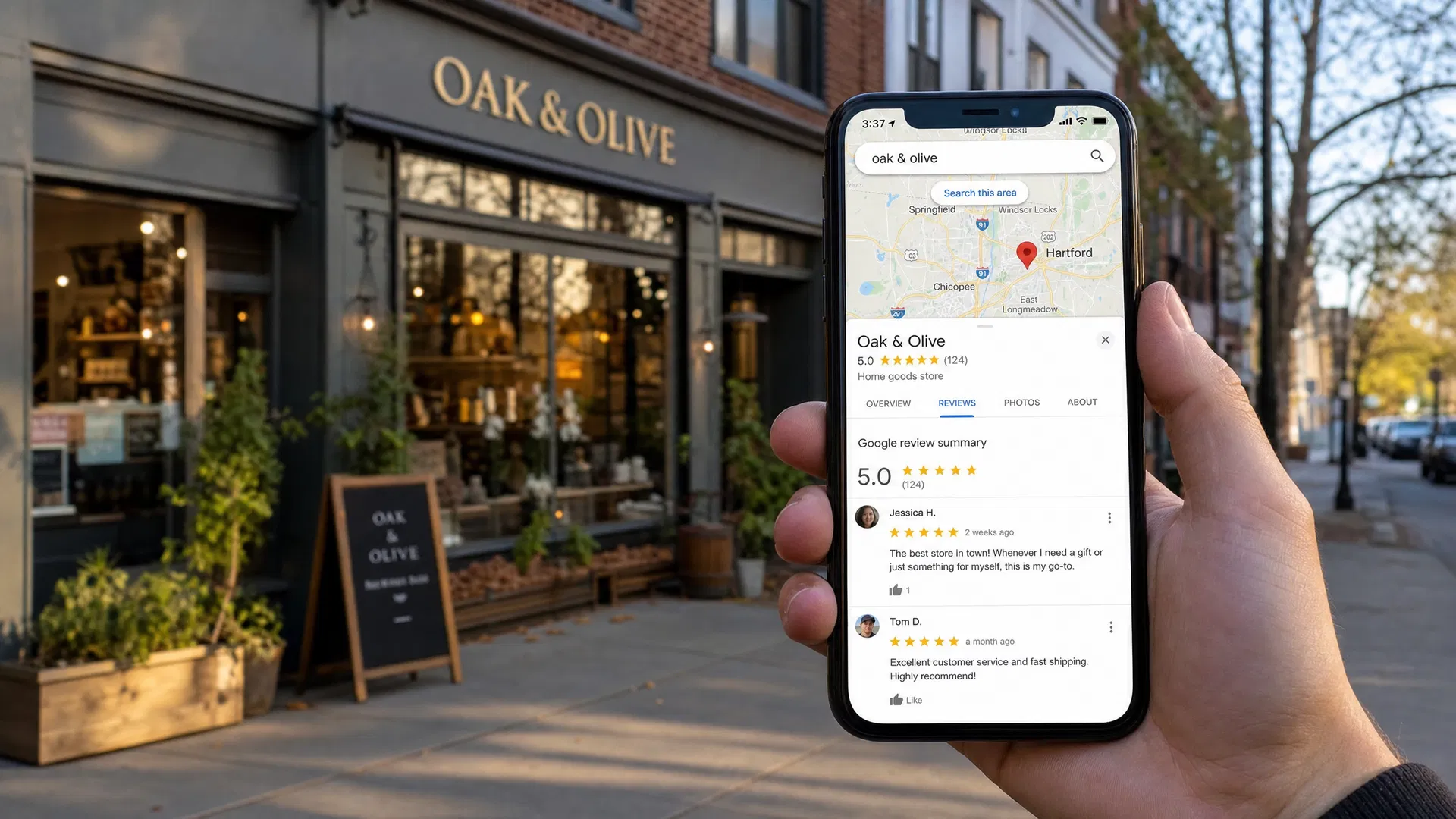
Introduction to local SEO: why does it matter so much in 2026?
Local search engine optimization, or local SEO, has become an essential lever for businesses that want to attract nearby customers. In 2026, with the continued rise of mobile and voice search, optimizing your local presence on search engines is more strategic than ever. Whether you run a store, a restaurant or a service business, mastering the fundamentals of local SEO will help you capture qualified traffic and grow your revenue.
As consumers expect fast, relevant results tailored to their location, search engines have refined their algorithms to favor local content. This shift forces businesses to rethink their digital strategy and build in optimizations specific to local SEO. This complete guide will walk you through the process step by step and give you the keys to improving your local visibility in 2026.
Key takeaway: a local mobile search often comes before a store visit.
To take your analysis of your online presence further, check out our detailed SEO audit, which will help you identify your site's strengths and weaknesses.
Local SEO basics
Understanding how local SEO works
Local SEO means optimizing a business's visibility in location-based search results. Unlike traditional SEO, which targets a broad audience, local SEO focuses on queries tied to a specific geographic area, such as "bakery in Lyon" or "hairdresser near me". Search engines such as Google use several signals to determine a site's local relevance, including proximity, prominence and how relevant the business is to the query.
Google's systems also rely on language understanding to interpret more conversational queries, such as voice searches. Local SEO therefore has to adapt to these habits while keeping its fundamentals.
The key elements of local SEO
The essential local SEO factors include:
- Your Google Business Profile (formerly Google My Business): this is your business's digital storefront on Google. It must be complete and updated regularly.
- Local citations: consistent information (name, address, phone number) across directories and other platforms is crucial.
- Customer reviews: they strongly influence trust and rankings in local results.
- Localized content: using geographic keywords and creating content that's relevant to the local community.
How local SEO differs from traditional SEO
While traditional SEO aims to improve a website's overall rankings for national or international keywords, local SEO targets a narrower audience, often based on geographic proximity. This calls for specific strategies:
- Greater use of geographic terms in tags, titles and content.
- Optimization for voice and mobile searches, which are very common in a local context.
- Active management of reviews and online reputation.
- A focus on local directories and platforms rather than on general links.
These specific features make local SEO essential for any business that wants to win local customers in 2026.
Optimizing your Google Business Profile
Your Google Business Profile (formerly Google My Business) is a key element of local SEO. It lets your business appear in the local pack, on Google Maps and in local search results. A well-optimized profile increases your visibility with nearby searchers. Here's how to optimize your profile effectively to maximize your local impact.
1. Fill in all the essential information
The first step in optimizing your Google Business Profile is to provide complete, up-to-date information. This includes:
- Business name: Use your official business name without adding unnecessary keywords.
- Physical address: Provide a precise, verifiable address so you appear on Google Maps.
- Phone number: A local number is preferable, as it reinforces geographic relevance.
- Opening hours: Keep your hours up to date, especially for public holidays or special periods.
- Categories: Choose the most relevant categories to describe your main activity.
- Description: Write a clear, engaging description that includes local keywords naturally.
Make sure all the information matches what appears on your website and in local directories. Data consistency, known as NAP (Name, Address, Phone), is an important criterion for Google.
2. Add high-quality photos and videos
Visuals play a major role in how attractive your listing is. Google Business Profile lets you add photos and videos to showcase your business, your products, your premises or your team.
- Professional photos of your premises and products
- A short introduction video
- Regular photos showing your activity in real time
Listings with images get more clicks and interactions, which indirectly improves your local rankings. Don't forget to name your files with local keywords and add a descriptive caption to optimize your images for search.
3. Encourage and manage customer reviews
Customer reviews are a decisive factor for local SEO and for prospects' trust. A listing with many positive reviews is more likely to be featured by Google.
- Encourage your satisfied customers to leave genuine reviews.
- Always respond to reviews, whether positive or negative, to show your commitment.
- Analyze the feedback to keep improving your service or product.
Key takeaway: reviews are more than simple customer testimonials; they are an important lever for local SEO. Respond quickly and personalize your replies to strengthen customer relationships and look after your visibility.
Finally, to ensure complete technical optimization, run a technical SEO audit of your site and track your local rankings with a rank tracking tool. These complementary actions will strengthen your local SEO strategy and maximize your presence on Google.
Creating localized content and on-page optimization
Creating localized content is an essential lever for strengthening your visibility in local search results. Combined with rigorous on-page optimization, it lets you precisely address the needs and expectations of searchers in your geographic area. This section covers best practices for producing relevant content and optimizing your pages to improve your local SEO.
1. Produce relevant, localized content
Localized content must first and foremost address the specific needs of your local audience. This means including precise geographic references, such as the name of the city, neighborhood or region, as well as cultural or economic elements specific to your area. For example, if you're a real estate agency in Lyon, mention the neighborhoods, local events or the particular features of the Lyon property market.
To strengthen relevance, use a variety of formats: blog posts, practical guides, local customer testimonials, interviews with local experts and more. This content enriches the user experience and gives visitors reasons to stay on your site.
2. Optimize your tags and on-page content
Once you've created your localized content, it's crucial to optimize each page for local search. Start by including local keywords in the title, meta description and h1 tags and in the body text. For example, a title such as "Digital Marketing Agency in Marseille: Boost Your Local Visibility" is more effective than a generic one.
Also pay attention to the semantic structure of your pages, using h2 and h3 tags to organize the content and make it easier to read, for both users and search engines. Adding precise addresses, local phone numbers and legal notices relating to your location also helps strengthen trust and local relevance.
3. Use modern optimization tools
To get the most out of your localized content, use advanced SEO optimization tools, especially those that incorporate artificial intelligence. These tools help you analyze the relevance of your keywords, optimize semantic density and generate suggestions tailored to your local audience. To learn more about these methods, see our page on AI content optimization.
Finally, regularly check other resources to deepen your local SEO skills, such as the guides in our other blog posts. Staying constantly up to date is the key to remaining competitive in an ever-changing environment.
Building local backlinks: strengthen your local link building
Local link building is an essential lever for improving your business's visibility in location-based search results. Earning quality backlinks from relevant local sites strengthens your site's authority in the eyes of search engines and helps you rank better for queries targeting your geographic area.
Identify relevant local backlink sources
To build a strong link profile, start by identifying influential local sites that are relevant to your industry. These can include:
- Local business directories
- Regional professional associations
- Specialized local blogs or media outlets
- Business partners or suppliers
- Local event organizers or sponsors
The goal is to favor sources with a clear geographic footprint and a topic close to yours, to maximize the relevance and SEO value of the backlinks you earn.
Effective strategies for earning local backlinks
Several techniques can help you earn local links naturally and sustainably:
- Create high-quality localized content: Produce articles, studies or guides that directly concern your region. This type of content is likely to be shared and cited by local players.
- Take part in local events: Sponsoring, speaking at or collaborating on regional events often earns mentions and links on partner sites or in local media.
- Build partnerships with local players: Offer concrete collaborations (a joint event, a local study, a customer testimonial) to complementary businesses: these naturally justify a mention. However, avoid systematic reciprocal links, which Google classifies as link schemes.
- Use high-quality local directories: List your business on recognized platforms specific to your geographic area to strengthen your local presence.
Measure and optimize your local link building
Once your local backlinks start to multiply, it's crucial to monitor their quality and impact. Use regular backlink analysis to:
- Assess the authority and relevance of the sites linking to you
- Detect toxic or unnatural links that could hurt your SEO
- Adapt your strategy based on the results
The tools built into your SEO platform will let you automate these checks and stay agile in managing your local link building.
Key takeaway: in local link building, quality always beats quantity. Favor natural links that come from genuine relationships with local organizations. This will strengthen your credibility and rankings for the long term.
Performance tracking and essential local SEO tools in 2026
Performance tracking is a crucial step in optimizing your local SEO strategy. In 2026, tools have become more sophisticated, offering precise data and in-depth analysis. This section walks you through tracking best practices and presents a selection of must-have tools for measuring and improving your local visibility.
Key performance indicators (KPIs) to monitor
To assess how effective your local SEO is, you need to track several specific KPIs:
- Local rankings: your business's position in local results (local pack, Google Maps, etc.).
- Local traffic: the number of visitors coming from location-based searches.
- Local conversions: calls, quote requests and store visits generated by local SEO.
- Reviews and reputation: the number and quality of customer reviews on local platforms.
- Local click-through rate (CTR): the percentage of searchers who click on your listing or site from local results.
These KPIs let you adjust your strategy, identify weak spots and maximize your return on investment.
Must-have tools for local SEO tracking
Here are a few well-known tools for tracking your local SEO, as of this writing (October 2026). Each offers features suited to the needs of agencies and local businesses.
| Tool | Main features | Pros | Cons |
|---|---|---|---|
| Google Business Profile performance data | Tracking of views, searches, interactions and calls | Free, data comes directly from Google | Analysis limited to your own profile |
| BrightLocal | Local rank tracking, SEO audits, review management | Customizable reports | Paid subscription |
| Semrush Local | Local visibility analysis, keyword tracking, listings management | Integrates with other Semrush tools | Paid subscription |
| Yext | Local listings management, multi-platform syncing | Large partner network | Paid subscription, mainly designed for multi-location businesses |
How to interpret the data and adjust your strategy
Once you've collected data with these tools, analyzing it is essential to make informed decisions. Here are a few tips to optimize your tracking:
- Set up regular reports: Use SEO reports to track how your KPIs evolve and spot anomalies quickly.
- Compare your performance: Measure yourself against your local competitors on the same queries; our tool comparison also helps you choose the right instruments.
- Test and adjust: Adapt your actions based on the results, for example by optimizing your Google Business Profile or asking for more customer reviews.
- Automate your tracking: Use tools that can send alerts or automatic reports so you can react faster.
By adopting these best practices and making full use of modern tools, you'll maximize the potential of your local SEO in 2026, ensuring greater visibility and qualified traffic for your business.
Future local SEO trends in 2026 and beyond
The rise of artificial intelligence in local search
Artificial intelligence (AI) continues to transform search, including local search. Google better understands contextual and conversational queries, such as those asked to a voice assistant. For local businesses, this means clearly answering, on their site and in their profile, the questions their customers ask: services, area served, opening hours, indicative prices.
The importance of user experience
Visitor experience matters: a fast, accessible, mobile-friendly site does a better job of turning local searches into calls or visits. Google doesn't detail the role of behavioral signals in its local rankings; it cites three main criteria: relevance, distance and prominence.
The rise of visual and location-based search
With better visual recognition technology, such as Google Lens, visual search is taking on a bigger role in local SEO. Users take photos of products or places and look for information nearby. Optimized images, precise alt attributes and up-to-date location information help you capture this qualified traffic.
Key takeaway: in 2026, local SEO is no longer just about keywords. It combines a well-maintained business profile, managed reviews, content rooted in your area and a good user experience.
Conclusion
Local SEO in 2026 is a constantly evolving field where adapting quickly to new technologies and user behavior is essential. Businesses that invest in optimization based on artificial intelligence, user experience and visual search will be able to stand out effectively in their local market.
To track your local rankings, Zerkado checks your keywords on Google in the city of your choice, on mobile or desktop. Explore Zerkado's features now or check out our pricing for agencies of every size.